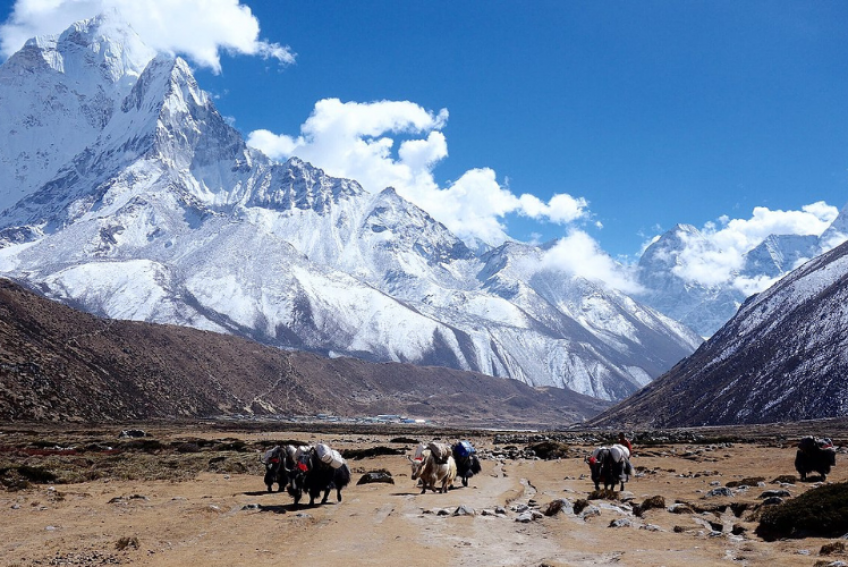
Tour at a Glance
Tour Highlights
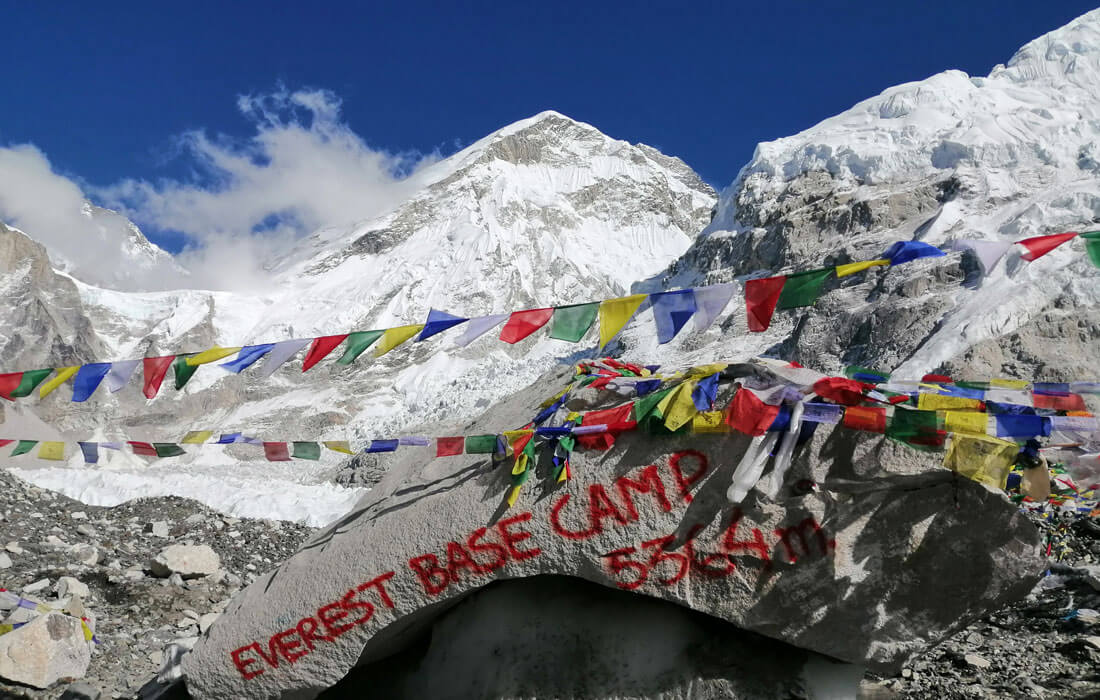
- Trek to iconic Everest Base Camp at the foot of the world's tallest peak
- Stand atop Kala Patthar for spectacular 360-degree views of Mt. Everest
- Immerse yourself in rich Sherpa culture and visit Tengboche Monastery
- Explore the vibrant mountain hub of Namche Bazaar high in the Himalayas
- Experience the thrilling and scenic mountain flight into Lukla Airport
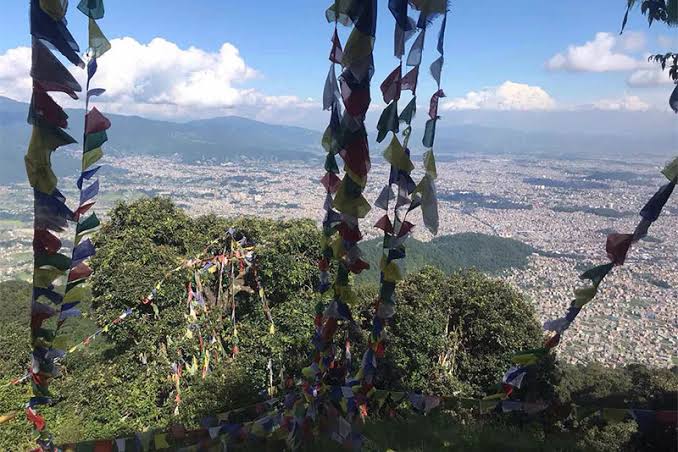
- Cross spectacular suspension bridges draped in colorful Buddhist prayer flags
- Hike through the stunning alpine landscapes of Sagarmatha National Park
- Enjoy warm hospitality and local meals in traditional mountain teahouses
Tour Overview
Welcome to Kathmandu!
You arrive in Kathmandu, the vibrant capital of Nepal. As you step out of the arrival gate at Tribhuvan International, our airport representative will be waiting with a name card easy to spot. From there, a private vehicle takes you to your hotel in Thamel (Kathmandu Village Home or Kathmandu Business Hotel) so you can rest, shower, and shake off the long flight.
Kathmandu to Lukla (Flight) to Phakding – 2,651 m / 8,697 ft – 4 hrs
Due to changes in the regulations and upgrades at the domestic airport in Kathmandu, flights to Lukla will likely operate out of Manthali Airport in Ramechhap District in the major season time, March April and Mid September to Mid November.
This involves a four-hour drive from Kathmandu at night. The flight from Manthali will depart early in the morning and take 20 minutes.
Our journey starts with the legendary Lukla flight—a 30-minute flight with breathtaking views of terraced hills, deep valleys, and the distant peaks of the Everest region. Lukla’s Tenzing-Hillary Airport, located at 2,860m, is renowned for its unique setting and serves as the gateway to the Everest trek in Nepal.
From Lukla, the trek is gentle as we descend through pine forests and scattered Sherpa villages. The trail follows the Dudh Koshi River, passing chortens, mani walls, and prayer flags fluttering in the wind. After about 4 hours of easy walking, we will reach Phakding, a peaceful riverside village surrounded by greenery.
Phakding to Namche Bazaar - 3,440 m / 11,286 ft – 5 to 6 hrs
Phakding to Namche Bazaar hike is one of the longer, steeper days of the entire trek, with around 830 m (2,723 ft) of elevation gain over roughly 7.4 km.
You’ll walk alongside the Dudh Koshi River, crossing five high suspension bridges — each draped in faded prayer flags and swaying just enough to make you watch your footing — with the river roaring through the gorge far below. The last and tallest of them is the famous Hillary Suspension Bridge, the photo most trekkers send home from Day 2 of the EBC trek.
Acclimatization Day in Namche Bazaar
Today is a rest day, but not a lazy one. Your Magical Nepal guide will take you slowly - and we mean slowly - up to the Everest View Hotel (3,880 m / 12,729 ft). It is one of the highlights of the Everest Base Camp trek. The pace is deliberate, with regular stops to breathe, drink water, and look back at Namche shrinking below.
Namche to Tengboche – 3,956 m / 12,979 ft – 5 to 6 hrs
The walk from Namche to Tengboche is one of the most photographed sections of the entire Everest Base Camp Trek, and after running it hundreds of times, our guides still slow down at the same spots to take it in.
the trail drops steeply for about an hour down to Phunki Thanga (3,250 m) on the Imja Khola river. It’s a long descent through rhododendron and birch forest, with prayer wheels turning in the streams that feed the river.
Tengboche to Dingboche 4,380 m / 14,370 ft – 4 to 5 hrs
The walk from Tengboche to Dingboche is about 5 to 6 hours over roughly 12 km (7.5 miles), with around 550 m (1,800 ft) of elevation gain, and it’s the day the landscape stops looking like a forest trail and starts looking like the high Himalaya you came for.
Acclimatization Day in Dingboche – 4,380 m / 14,370 ft – 3 to 4 hrs
Today is your second and final acclimatization day on the Everest Base Camp Trek, and the rule is the same as Day 3 in Namche: climb high, sleep low. The standard hike from Dingboche is up to Nangkartshang Peak (also spelled Nagarjun Hill — 5,083 m / 16,676 ft).
Dingboche to Lobuche – 4,938 m / 16,200 ft – 4 to 5 hrs
You’ll cover roughly 8.5 km (5.3 miles) in about 5 to 6 hours, with around 530 m (1,740 ft) of elevation gain - but every steep is felt up here.
Lobuche to Gorakshep - Kalapatthar - Gorakshep – 5160 m / 16929 ft – 6 to 7 hrs
One of the biggest days of the Everest Base Camp Trek — short on distance but high on altitude, with one of the trek’s signature summits in the afternoon.
You’ll cover roughly 4.5 km (2.8 miles) in about 3 hours to reach Gorakshep, then another 2 km (1.2 miles) and 380 m (1,247 ft) of elevation gain up to Kalapatthar in the afternoon.
After running this combination hundreds of times, our guides have a clear way of splitting the day so you arrive at the top of Kalapatthar with energy left for the view.
You’ll leave Lobuche after an early breakfast, around 7:30 AM. The trail climbs gently out of the village along the western edge of the Khumbu Glacier, with Pumori (7,161 m / 23,494 ft), Lingtren (6,749 m / 22,142 ft), and Khumbutse (6,640 m / 21,785 ft) rising directly ahead.
The glacier itself is visible to your right the whole way — a vast frozen river of ice and rock, groaning audibly on a still morning. About an hour out of Lobuche, you’ll cross a small stream and then climb a short, rocky ridge with cairns and prayer flags. This is the high point of the morning, around 5,030 m (16,503 ft).
From here the trail drops slightly onto the lateral moraine and traces a rocky, undulating path for another 90 minutes. The terrain is uneven — loose stones, glacial debris, and a few short scrambles.
Watch your footing. Your guide will set a slow, steady pace. The wind tends to pick up in this stretch, and Nuptse (7,861 m / 25,791 ft) dominates the southern view the entire way.
You’ll round a final bend and drop into the wide, sandy basin where Gorakshep (5,164 m / 16,942 ft) sits - a tiny cluster of five or six teahouses on what was once a glacial lakebed, with Pumori towering directly behind it.
Gorakshep to Pheriche (Morning hike to EBC) Pheriche – 4,371 m / 14,340 ft – 8 to 9 hrs
This is the day. After eight days on the trail, hundreds of slow steps, two acclimatization days, one Kalapatthar sunset, and a cold night at 5,164 m, today is the Everest Base Camp day. After an early breakfast at Gorakshep — usually around 7:00 AM — your guide will set out with you along the western edge of the Khumbu Glacier for the final push to Everest Base Camp (5,364 m / 17,598 ft).
The walk from Gorakshep to base camp is about 6.5 km (4 miles) round trip, taking 4 to 5 hours. It’s not technically difficult, but at this altitude every step costs something.
The trail traces the rocky lateral moraine, climbing and dropping over uneven ground, with Pumori (7,161 m / 23,494 ft), Lingtren (6,749 m / 22,142 ft), Khumbutse (6,640 m / 21,785 ft), and Nuptse (7,861 m / 25,791 ft) towering above you the entire way.
After base camp, you’ll retrace your steps to Gorakshep for a hot lunch (around 1:00 PM), then pick up your duffle and start the long descent.
The afternoon walk drops you back down through Lobuche, past the Thukla Memorials on the moraine, and steeply down into the valley to Pheriche (4,371 m / 14,340 ft) — about another 4 to 5 hours, covering roughly 8 km (5 miles) with 800 m (2,625 ft) of net descent.
Pheriche to Namche Bazaar Namche – 3,440 m / 11,286 ft – 6 to 7 hrs
After Everest Base Camp and Kalapatthar, the descent to Namche Bazaar starts. The trail follows the EBC return route, and we’ll get to see the landscapes we passed on the way up from a different angle. With every step, the air gets thicker, and breathing gets easier – and we get an energy boost.
We’ll pass Pangboche and Tengboche, and the monastery might invite us to stop for a quiet moment. The trail goes through forests and suspension bridges, and then Namche Bazaar comes into view.
Namche to Lukla – 2,860 m / 9,383 ft -7 hr
Today is our last day of walking. The Namche to Lukla trek starts with a big descent, back through Monjo and Phakding, and then a gradual climb into Lukla. Along the way, prayer flags flutter, rivers rush by and stone-carved mani walls give us one last dose of Himalayan magic.
The trail will feel different this time – less about the effort, more about the reflection. We’ve walked in the footsteps of the mountaineering legends, experienced Sherpa culture and tested our limits in the highest mountains in the world.
Lukla to Kathmandu (Flight) – 30 min
Weather permitting, your early-morning Lukla flight back to Kathmandu is the last leg of the Everest Base Camp Trek. The flight is short — about 30 minutes direct to Kathmandu (or 20 minutes to Manthali Airport in Ramechhap during peak season, followed by a 4-hour drive). As the plane takes off from the sloped runway at Tenzing-Hillary Airport, you’ll get one final look at the mountains you’ve spent twelve days walking through — Lukla shrinking below, the green foothills rolling out toward the horizon, and the Khumbu giants disappearing behind you for the last time. Upon arriving in Kathmandu we will transfer you to your hotel.
Final Departure - farewell day
We will arrange your airport drop-off so you have a smooth and hassle-free goodbye.
Inclusions
- Local transfers for your international flight x 2 (arrival/departure).
- Local transfers for your domestic flight x 2.
- Kathmandu Lukla Kathmandu Flight as per itinerary.
- Guide for 12 Days, Porter for 11 Days.
- Sagarmatha National Park Entry Permit and Local Entry Permits.
- 2 nights accommodation in a Kathmandu (Kathmandu Business Hotel or similar).
- 11 nights accommodation in mountain teahouses.
- Staff insurance and necessary ground transport for support staff.
- Trekking permit.
- First aid box - with guide.
- Private Trek.
Exclusions
- All meals and personal expenses.
- Tips for your guide and porter (Optional)
Mandatory Items to Bring:
Valid passport, travel insurance policy documents, trekking permits, sturdy hiking boots, thermal layers, waterproof jacket, down jacket, sleeping bag, water purification tablets, personal medications, cash in Nepalese Rupees
Not Suitable For:
Pregnant women, People with wheelchairs, Sick or medical condition
Customer Reviews (0)
No reviews yet for this tour package.
$ 1,140.00 / pax
You Might Also Like