Tour at a Glance
Tour Highlights
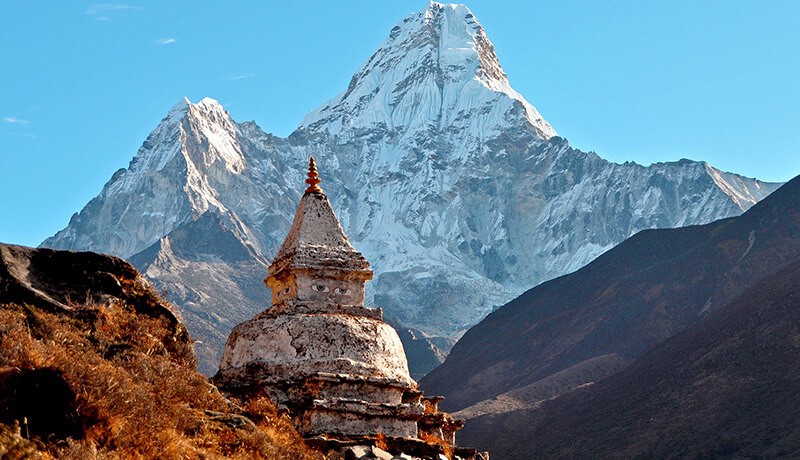
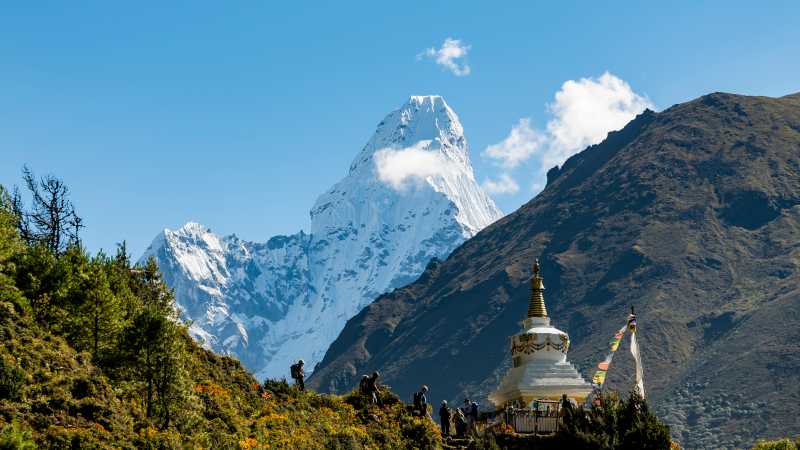
- Thrilling climb up Ama Dablam (6812m) one of Earth's most beautiful peaks
- Comprehensive 28-day itinerary allowing for optimal altitude acclimatization
- Trek through the iconic Khumbu Valley with stunning views of Mount Everest
- Immersive cultural experiences in historic Sherpa villages like Namche Bazaar
- Technical ridge climbing involving challenging rock ice and snow sections
- Fully supported base camp services with high-quality tents and great meals
- Experienced government-licensed Sherpa climbing guides leading the route
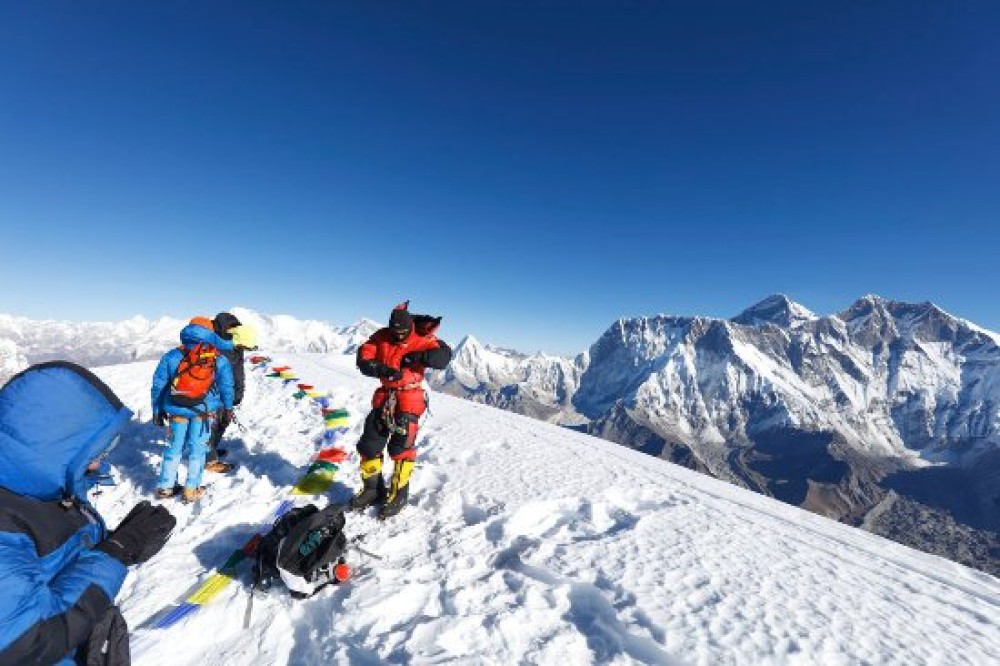
- Breathtaking panoramic summits viewing Everest Lhotse and Makalu
- Fixed-wing scenic flight between Kathmandu and the dramatic Lukla airstrip
- Explore ancient Buddhist monasteries including the famous Tengboche Monastery
Tour Overview
For mountaineers planning an Ama Dablam expedition 2026, this peak represents more than a summit. You will have your technical skill, judgment, and composure at altitude to be tested. Ama Dablam is not for inexperienced climbers. Only those who come prepared and are absolutely ready can attempt it and feel one of the most rewarding alpine climbing experiences on Earth.
This guide breaks down everything you need to know about the Ama Dablam climbing expedition. From understanding height and difficulty to itinerary, cost, logistics, and expert decision-making, you can easily decide if this legendary peak is part of your dream list.
Arrival in Kathmandu and hotel transfer - Altitude: 1,400 meters/ 4,593 feet
You will make your landing in this Himalayan nation on this day. After landing and visa procedure, our staff will pick you up from the airport terminal and then take you to your reserved hotel in a comfortable private vehicle. They will also help you with the check-in procedure, and after you get some rest, you can visit our head office to learn more about your expedition.
Climbing preparation in Kathmandu
Today, will take care of all the paperwork required for this expedition. Meanwhile, you will explore some of the most popular tourist destinations inside the capital valley.
Kathmandu to Lukla flight and trek to Phakding - 2,610 meters/ 8,562 feet
Your journey to the magnificent Himalayas finally starts on this day. During the first part, you will take a domestic flight from Tribhuvan International Airport (TIA) and slowly fly over the green pinty hills and colorful valleys, heading toward the mountain. The closer you get to the mountain, the more grandeur the vistas of the Himalayas become. In about 40 minutes of flight from Kathmandu, you will make your touchdown at the Tenzing Hillary Airport in Lukla.
After taking a short break at Lukla, you will then follow the trail across Chaurikharka and Cheplung Villages, from where you will be able to catch clear views of Khumbila. Then, you will trek down to the banks of the Dudh Koshi River, and you will follow the trail across the swinging bridge and push toward Dudh Koshi Ghat. You will continue along the relatively leveled trail to reach the Phakding Village.
Phakding to Namche Bazaar - Altitude: 3,445 meters/ 11,302 feet
This portion of the mainstream Everest Base Camp Trek is considered on the most exciting part of the adventure. After enjoying a hot breakfast at Phaakding, you will continue following the bank of the Dudh Koshi, which stretches north up the Benkar Valley. After trekking further, you will then cross Chumoa Village and Monjo Village. Monjo is at the entrance gate of the Sagarmatha National Park, and your permits will be checked here.
Moving further in your trekking route, you will cross a suspension bridge up ahead arrive at the Jorsale Village and continue trekking on the banks of Dudh Koshi River and Bhote Koshi River. Durig the last part, you will then follow the steep trail, Namche Ukalo, to reach the vibrant Sherpa Capital. Besides the first-ever epic glimpse of Mt. Everest from Namche, you will also be able to enjoy incredible views of Lhotse Shar, Ama Dablam, Lhotse, Thamserku, and others.
Acclimatization day in Namche Namche Bazaar: 3,445 meters/ 11,302 feet
You covered a significant distance and rose up to a major altitude in this mainstream Everest Base Camp Trek route. Before you head toward Ama Dablam, diverting from the mainstream route, you will enjoy an acclimatization day here. Namche Bazaar is the most renowned rest and acclimatizing location in the entire Everest region and there are several hiking prospects here. You should definitely take part in the morning hikes to acclimatize properly before heading further.
The most popular hiking destinations in and around Namche are Hotel Everest View, Syangboche Airstrip, Khunde, and Khumjung Village. From these points, you will be able to enjoy clear and stunning views of Everest and other surrounding peaks. During the daytime, you can leisurely explore other highlights of the Sherpa capital, like Namche Monastery, Sherpa Culture Museum.
Trekking from Namche Bazaar to Deboche: 3,820 meters/ 12,532 feet
After enjoying a rest day at Namche today, you will continue further on the winding trail, heading toward another major highlight of the Everest region. You will first make your descent into the Dudh Koshi Valley and head toward Phunki Thenga. From this village onwards, you will then move along the ascending trail that leads you all the way to Tengboche. This is a sacred destination in the Khumbu Valley, and it houses one of the most significant Buddhist monasteries, Tengboche Monastery, which was built in 1916 by Lama Gulu.
Deboche to Pheriche trek: 4,300 meters/ 14,107 feet
Continuing further on the trail of your exciting Himalayan exploration, you will head toward another popular acclimatization destination in the Everest region. Enjoying clear and stunning views of Ama Dablam, Lhotse, and Everest, you will follow the winding trail on the mountainside to reach the beautiful Pangboche Village. There is an old monastery here, and you will visit it to get blessings from the Lama guru for the expedition.
Then, from here, you will follow the trails above the river, passing and trekking the stupa and chortens to reach Shomare Village. After taking a break here, you will then move along the exciting route beneath the towering Taboche and Cholaste to reach Pheriche Village.
Acclimatization and exploration day at Pheriche: 4,300 meters/ 14,107 feet
As you have trekked over the alpine zone, it is time for another acclimatizing rest. Before you push further into the trans-Himalayan zone, it is important to take a rest day here to mitigate the risk of altitude sickness. Like the acclimatization day in Namche, you will do some short hikes around the region to get used to the new altitudes more effectively. The Dingboche Viewpoint and Nagakarsang Hill are some of the popular hiking destinations here that reward you with panoramic views of the Himalayan peaks.
There is also a Himalayan Rescue Associate in Pheriche, where daily lectures are given regarding altitude sickness, its symptoms, and preventive measures. During the daytime, you can stroll around the traditional village, learning more about the Sherpa culture, traditions, and lifestyle that have adapted to the Himalayan region.
Trekking from Pheriche to Ama Dablam Base Camp - 4,800 meters/ 15,748 feet
Finally, it's time to head toward the main objective of this Himalayan expedition. During the first part of this day’s trek route, you wil retrace your steps back to Pangboche Village and descend to the Dudh Koshi River before taking a sharp climb to a kharka. From this section of the trail, you can catch epic close-up views of Ama Dablam, Lobuche, Cholatse, Thamserku, Lhotse, Pumori, and Amphu Gyabjen.
You will continue trekking on the thrilling trail and enjoy the wide-open Himalayan vistas heading toward the Ama Dablam Base Camp. This base camp is located in a large and open kharka right beneath the majestic Ama Dablam Peak. Today, you will spend your night out here camping, surrounded by pristine peaks in a truly magical realm.
Day 11 - 22 : Summit Ama Dablam and return to base camp : 6,812 meters/ 22,349 feet
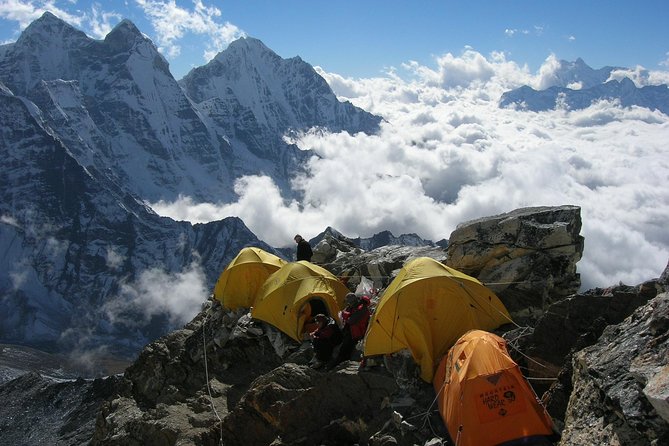
The Day 10 to Day 22 of your Ama Dablam Expedition will be the climbing period. There are three High Camps on the mountain, and during this scaling period, you will move along these high camps and back and forth, acclimatizing properly before pushing for the summit.
However, before starting your scaling adventure on the Ama Dablam, you will do some practice climbs at the base camp and do some acclimatization hikes around the region before taking the route of the mountain. There are three camps on the mountain, and you will gradually ascend along these camps:
Camp 1 (5,705 meters/ 18,718 feet): During this portion, you move along the grassy ride to the east, and you will also traverse across the boulders to the ridge.
Camp 2 (5,900 meters/ 19,357 feet): Heading to the top of the ridge, you move along the snow slopes to the eastern face and reach the yellow tower. This section is a bit technical as you reach the camping site.
Camp 3 (6,300 meters/ 20,770 feet): During this part, you wil process to the grey tower and slowly ascend on the mushroom ridge to reach the campsite. From Camp 3, you will push for a small snowfield beneath Bergschrung and cross it to reach the hanging glacier before conquering the peak.
This expedition period will take about 12 days, and there will also be a contingency day in case of bad weather. After completing your Ama Dablam Expedition, you will then gradually descend along the high camps on the mountain and climb down to base camp.
Sumit preparation days
There are three High Camps on the mountain, and during this scaling period, you will move along these high camps and back and forth, acclimatizing properly before pushing for the summit.
Sumit preparation day
There are three High Camps on the mountain, and during this scaling period, you will move along these high camps and back and forth, acclimatizing properly before pushing for the summit.
Sumit Preparation day
There are three High Camps on the mountain, and during this scaling period, you will move along these high camps and back and forth, acclimatizing properly before pushing for the summit.
Sumit preparation day
There are three High Camps on the mountain, and during this scaling period, you will move along these high camps and back and forth, acclimatizing properly before pushing for the summit.
Sumit preparation day
There are three High Camps on the mountain, and during this scaling period, you will move along these high camps and back and forth, acclimatizing properly before pushing for the summit.
Sunit preparation day
There are three High Camps on the mountain, and during this scaling period, you will move along these high camps and back and forth, acclimatizing properly before pushing for the summit.
Sumit preparation day
There are three High Camps on the mountain, and during this scaling period, you will move along these high camps and back and forth, acclimatizing properly before pushing for the summit.
Sumit preparation day
There are three High Camps on the mountain, and during this scaling period, you will move along these high camps and back and forth, acclimatizing properly before pushing for the summit.
Sumit preparation day
There are three High Camps on the mountain, and during this scaling period, you will move along these high camps and back and forth, acclimatizing properly before pushing for the summit.
Sumit day
However, before starting your scaling adventure on the Ama Dablam, you will do some practice climbs at the base camp and do some acclimatization hikes around the region before taking the route of the mountain. There are three camps on the mountain, and you will gradually ascend along these camps
Sumit day
This expedition period will take about 12 days, and there will also be a contingency day in case of bad weather. After completing your Ama Dablam Expedition, you will then gradually descend along the high camps on the mountain and climb down to base camp.
Sumit completed
This expedition period will take about 12 days, and there will also be a contingency day in case of bad weather. After completing your Ama Dablam Expedition, you will then gradually descend along the high camps on the mountain and climb down to base camp.
Trek from Ama Dablam Base Camp to Tengboche: 3,867 meters/ 12,687 feet
After completing the exciting Himalayan scaling journey, you will now commence the return journey from this day onward. For the first part, you will make your return to Tengboche from the Ama Dablam Base Camp. Moving steadily on the gradual downhill trail, you pass through Pheriche, Deboche, and Pangboche before finally re-entering the spiritual hub of the Khumbu Valley.
Tengboche to Namche Bazar: 2,800 meters/ 9,186 feet
The path stretching from Namche Bazaar to Lukla is just fabulous; you will trek past the cascading waterfalls, river, and suspension bridge along the way. Trekking past the beautiful villages of Jorsale, Mojo, and Chumoa, you will then ascend to the Lukla, the gateway of Everest.
Trekking from Namche to Lukla: 2,800 meters/ 9,186 feet
The path stretching from Namche Bazaar to Lukla is just fabulous; you will trek past the cascading waterfalls, river, and suspension bridge along the way. Trekking past the beautiful villages of Jorsale, Mojo, and Chumoa, you will then ascend to the Lukla, the gateway of Everest.
Flight from Lukla to Kathmandu 1,400 meters/ 4,593 feet
On this day, you will take a morning flight from Lukla and parting ways with the majestic Himalayas. Flying over the lush hills and vibrant valleys, you will then enter the bowl-shaped capital valley. We will drop you back at your hotel after reaching Kathmandu, and you can spend the day resting and leisurely strolling after the long Himalayan expedition.
Leisure day in Kathmandu : 1,400 meters/ 4,593 feet
This is the final day of the Ama Dablam Expedition itinerary before you leave the country. You can do sightseeing of the highlights that you missed during the second day of the expedition and do some shopping around the popular market place. Also, don’t forget to buy souvenirs to remember your epic Himalayan quest. Peak Climbing Nepal will also host a farewell dinner at a traditional restaurant to celebrate our partnership and your successful climbing.
Farewell, departure day
It's time to say goodbye to this Himalayan country. Today, our staff will receive you at your hotel and take you to the airport for your international as per your schedule. It is recommended that you should reach the airport at least 2 to 3 hours prior to the scheduled flight. Thank you. Tour end.
Inclusions
- Arrival Departure Transportation.
- Kathmandu Hotel - 5 Days.
- Kathmandu - Lukla Flight ticket (Flight from Manthali Airport during peak season).
- Mt. Ama Dablam Expedition Permit (Royalty).
- Liaison Officer Cost for Ama Dablam Expedition.
- Sagarmatha National Park and Khumbu Pasang Lhamu Rural Municipality Permit.
- Essential climbing Equipment in Base Camp and Above the Base Camp.
- Food Accommodation during the trekking.
- High altitude Food for Expedition Period.
- Experienced Private Climbing SherpaGuides for the Expedition.
- Baggages /Luggages carrying by Mules or Porter Up and Down till Base Camp.
- Required fixed and Dynamic ropes for Climbing.
- Insurances, Wages, Meals and Allowances for guide and members.
- Expedition Sherpa, Porters, and Base Camp Staff.
- Solar system for Battery Recharging in the Base Camp.
- Icefall rope fixing charges, tents at camp I, II, III.
- First aid Medical Kits for the group and the staffs.
- Walkie-Talkie and Satellites Phones for communication (if you want to use them for personal work, charge $4 per unit).
- Services Charges and Government Taxes.
- Duffle Bags for Packing gear and your items.
Exclusions
- Lunch and Dinner during your stay in kathmandu.
- Climbing gear for each climber.
- Sumit bonus (USD 700) per client only on successful climbing (1000 USD above 8000m).
- International Flight Cost.
- Personal Insurance.
- Tips for Guide and Porter.
Mandatory Items to Bring:
technical climbing boots, 8000m down jacket, alpine climbing harness, crampons, ice axe, mechanical ascender, jumar, belay device, locking carabiners, non-locking carabiners, 4-season sleeping bag, trekking poles, high-altitude mountaineering helmet, polarized mountaineering sunglasses, UV glacier goggles, thermal base layers, gore-tex hardshell jacket, gore-tex hardshell pants, heavy down mittens, liner gloves, headlamp with extra batteries, 30-40L daypack, 90-120L duffel bag, personal medical kit, high-factor sunscreen, lip balm with SPF, reusable water bottles, water purification tablets
Not Suitable For:
novice climbers, beginner hikers, individuals with cardiovascular conditions, individuals with severe asthma, people with vertigo, pregnant women, unacclimatized individuals, individuals with chronic knee issues, people with limited cold tolerance, untrained individuals, individuals lacking technical rope skills
Customer Reviews (0)
No reviews yet for this tour package.
$ 7,420.00 / pax
You Might Also Like